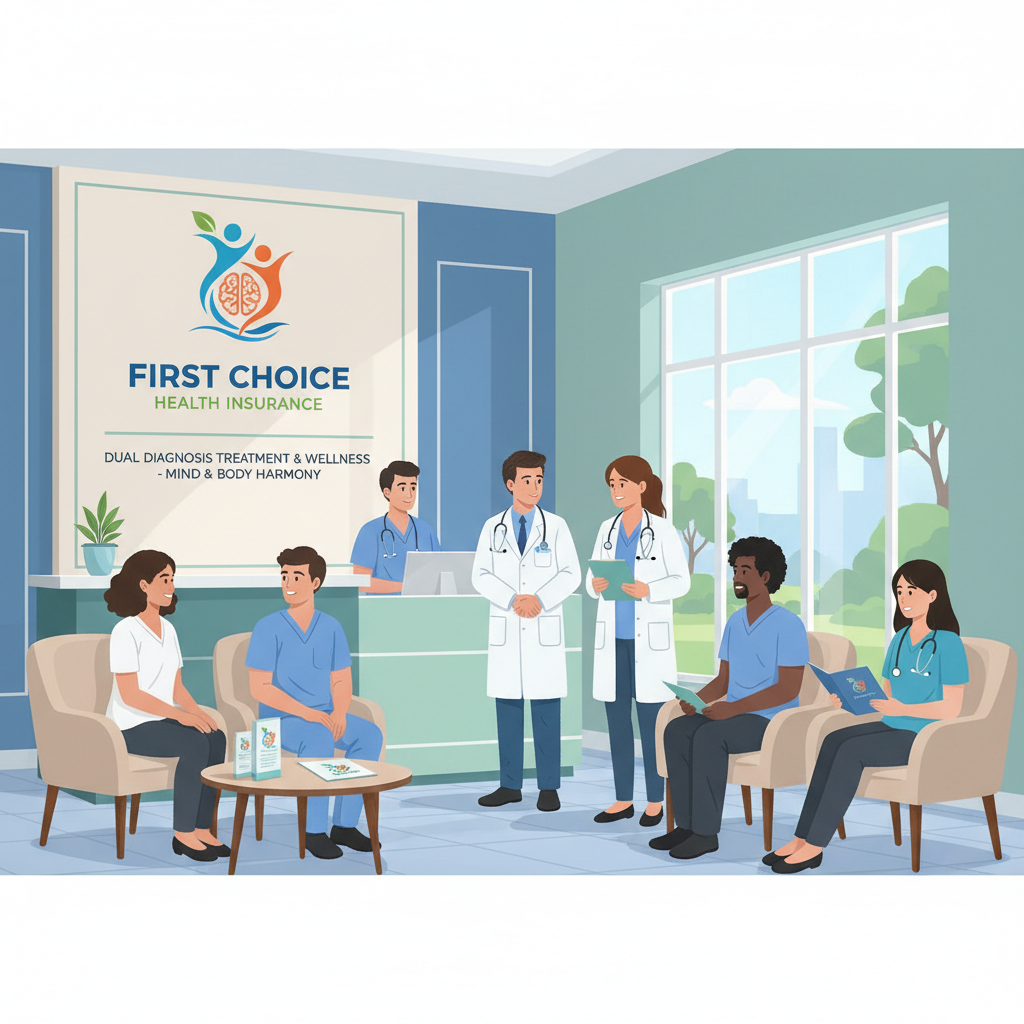
Understanding dual diagnosis treatment with First Choice insurance
If you are managing both a mental health condition and a substance use disorder, you are not alone. An estimated 17 million adults in the United States live with co occurring disorders that require integrated care for both issues at the same time. When you have First Choice Health Insurance, dual diagnosis treatment can be more accessible than you might expect.
Dual diagnosis treatment with First Choice insurance usually includes a combination of therapy, addiction services, and psychiatric care delivered through outpatient behavioral health programs. Because dual diagnosis treatment is considered both a mental health and substance use service, it typically falls under the essential health benefits that plans are required to cover on par with medical and surgical care, as mandated by the Mental Health Parity and Addiction Equity Act.
Understanding how your First Choice benefits work, what services are covered, and how to get admitted quickly can help you move from uncertainty to a clear plan for care.
How First Choice Health Insurance covers dual diagnosis
First Choice Health is a provider owned organization that supports self funded employer plans and offers a PPO network in 11 states, including Washington, Oregon, Alaska, and Colorado, with more than 120,000 providers across medical and behavioral health specialties. Your coverage for dual diagnosis treatment is tied to the specific plan your employer selected, but there are some consistent patterns you can expect.
Behavioral health and addiction as essential benefits
Because of federal parity and Affordable Care Act requirements, First Choice plans generally must cover:
- Mental health treatment, including therapy and psychiatry
- Substance use disorder treatment, including addiction services and medication assisted treatment
- Programs that address co occurring disorders in an integrated way
First Choice supported plans often cover:
- Residential or inpatient addiction treatment when medically necessary
- Medically supervised detox
- Outpatient levels of care such as partial hospitalization programs and intensive outpatient programs
- Ongoing outpatient counseling and psychiatric follow up
Many First Choice plans pay a significant portion of addiction treatment costs once your deductible and out of pocket maximum are met, sometimes covering around 80 percent on a basic plan and up to 90 percent on a preferred plan, although your exact benefits depend on your individual policy.
What “dual diagnosis treatment” usually includes
Dual diagnosis treatment combines mental health and addiction services in a single coordinated plan. With First Choice insurance, this often includes:
- Individual counseling focused on both mental health symptoms and substance use
- Group therapy that addresses triggers, coping skills, and relapse prevention
- Psychiatric evaluation and medication management for conditions such as depression, anxiety, bipolar disorder, PTSD, and more
- Addiction specific services for alcohol, opioids, stimulants, cannabis, benzodiazepines, or other substances
- Case management and referrals for higher or lower levels of care when needed
Programs that accept First Choice typically work directly with the insurance company to confirm that services meet “medical necessity” standards, which is what allows your care to be covered.
For more detail on general therapy coverage, you can review first choice health insurance therapy coverage and behavioral health counseling first choice insurance.
What outpatient dual diagnosis services are usually covered
If you are looking for help that fits around work, school, or family responsibilities, outpatient behavioral health treatment that accepts First Choice insurance can be a practical option. First Choice plans often cover several outpatient service types that work together to support dual diagnosis care.
Counseling and psychotherapy
Office based or virtual counseling is usually the core of outpatient dual diagnosis treatment. With First Choice, you can typically use your benefits for:
- First choice insurance individual counseling to work one on one on mood, anxiety, trauma, and substance use
- First choice insurance group counseling where you connect with peers facing similar challenges
- CBT therapy covered by first choice insurance and first choice insurance cbt therapy groups that teach practical skills for changing unhelpful thoughts and behaviors
These services are especially helpful when you are living with anxiety, depression, trauma related symptoms, or personality patterns that interact with substance use. If you are looking specifically for mental health therapy, you can learn more through mental health treatment covered by first choice insurance and mental health counseling that takes first choice insurance.
Addiction focused outpatient programs
For many people with dual diagnosis concerns, you need more than weekly therapy. First Choice plans may cover structured addiction care such as:
- Outpatient rehab covered by first choice insurance
- First choice insurance outpatient addiction treatment
- Addiction treatment covered by first choice health insurance
- Substance abuse treatment that accepts first choice insurance
Within these services, you may encounter specialized tracks for:
- Alcohol addiction treatment first choice insurance
- Opioid addiction treatment first choice insurance
- Stimulant addiction treatment first choice insurance
- Cannabis addiction treatment first choice insurance
- Benzodiazepine addiction treatment first choice insurance
These programs often include group therapy for addiction first choice insurance along with individual counseling, relapse prevention, and skill building so that your mental health and substance use are treated together.
Medication management and psychiatric care
Because dual diagnosis treatment addresses both mental health and addiction, psychiatric services play an important role. First Choice plans commonly cover:
- First choice insurance psychiatric evaluation services to clarify your diagnosis and treatment needs
- First choice insurance medication management psychiatry or medication management mental health first choice insurance to monitor medications safely and effectively
- Psychiatric services first choice insurance for ongoing care
Medication assisted treatment for addiction, such as methadone or buprenorphine for opioid use disorder, may also be covered when medically appropriate. To see how this fits into your overall mental health plan, you can also refer to mental health medication management first choice insurance.
Conditions you can treat through dual diagnosis care
Dual diagnosis treatment is designed for people who are managing both a substance use disorder and at least one mental health condition. With First Choice insurance, you can usually access care for a wide range of concerns.
Common mental health conditions
Outpatient programs that accept First Choice typically address:
- Anxiety therapy covered by first choice insurance
- Depression treatment first choice insurance
- Bipolar disorder therapy first choice insurance
- PTSD therapy covered by first choice insurance
- Personality disorder therapy first choice insurance
- Schizophrenia treatment first choice insurance
- ADHD behavioral therapy first choice insurance
- Trauma therapy covered by first choice insurance
When these conditions occur alongside alcohol or drug use, treatment plans are built to address both issues in the same sessions instead of separating them. You can learn more about integrated care in co occurring disorder treatment first choice insurance and therapy for co occurring disorders first choice insurance.
Substance use and addiction
Dual diagnosis programs covered by First Choice typically treat:
- Alcohol use disorder
- Opioid use disorder
- Stimulant use disorder
- Cannabis use disorder
- Sedative or benzodiazepine use disorder
If you are unsure whether your substance use meets criteria for a disorder, an evaluation through a mental health clinic that accepts first choice insurance or an outpatient behavioral health first choice insurance provider can help clarify your needs and recommend the right level of care.
Why outpatient dual diagnosis treatment is often a good fit
Many people assume that dual diagnosis treatment always requires going away to inpatient rehab. In reality, outpatient services that accept First Choice insurance can often provide the right level of care while allowing you to remain at home.
Outpatient dual diagnosis treatment can be especially beneficial if:
- You are medically stable and do not require 24/7 monitoring
- You want to continue working, parenting, or going to school
- You already have a support system at home or in your community
- You are stepping down from a higher level of care such as residential or detox
First Choice supported plans often include coverage for partial hospitalization or intensive outpatient programs that meet several days per week, which can be a strong fit if you need more structure than standard weekly therapy. Programs like these give you space to practice skills in your daily life and then process your experiences with a treatment team that understands co occurring disorders.
How Horizon style programs support dual diagnosis with First Choice
When you are looking for counseling and addiction treatment covered by First Choice Health Insurance, the type of outpatient provider you choose matters. Programs that are designed around dual diagnosis needs can often coordinate services more efficiently and help you use your benefits wisely.
Integrated counseling and addiction care
An outpatient behavioral health program that specializes in co occurring disorders will typically bring together:
- Therapy services covered by first choice insurance, including CBT, trauma informed care, and skills based groups
- Addiction counseling covered by first choice insurance to work directly on your substance use
- Addiction recovery program first choice insurance options that include relapse prevention, coping strategies, and recovery planning
These services help you focus on how your mood, thinking, relationships, and substance use interact, instead of treating each issue in isolation.
Skill building and relapse prevention
For long term stability, you often need more than symptom relief. Outpatient dual diagnosis programs that work well with First Choice benefits usually include:
- First choice insurance life skills therapy programs that support work, budgeting, communication, and daily structure
- First choice insurance anger management classes if anger or conflict is a trigger for substance use
- First choice insurance relapse prevention counseling to prepare you for high risk situations and setbacks
- Recovery support counseling first choice insurance and aftercare addiction counseling first choice insurance to maintain progress after more intensive treatment
These elements are especially valuable if you are balancing mental health symptoms, cravings, and life stressors at the same time.
When you choose an outpatient program that understands dual diagnosis and works closely with First Choice, you are not just accessing individual services. You are building a coordinated plan that connects therapy, addiction care, skills training, and psychiatric support in a way that fits your daily life.
Support for families and legal requirements
If your dual diagnosis situation affects your family or involves the legal system, you may also be able to use your First Choice benefits for:
- Family counseling covered by first choice insurance to improve communication, boundaries, and support at home
- Court ordered counseling first choice insurance or court mandated addiction counseling first choice insurance when treatment is part of a legal agreement
Including loved ones in treatment, when appropriate, can strengthen your recovery and help everyone better understand dual diagnosis.
Admissions, insurance verification, and getting started
One of the biggest worries you may have is how to actually start care. Dual diagnosis treatment first choice insurance coverage can feel complex, but most outpatient behavioral health programs that accept First Choice are experienced in guiding you through the process.
Step 1: Reach out for an intake
Your first step is usually a phone call or online inquiry with a mental health clinic that accepts first choice insurance or an outpatient rehab covered by first choice insurance provider. During this call you can expect to:
- Share a brief overview of your mental health and substance use history
- Provide your First Choice insurance information
- Schedule an initial assessment or intake appointment
Many treatment centers that work with First Choice can offer appointments within a few days, particularly for dual diagnosis cases that need prompt attention.
Step 2: Insurance verification and benefits check
Before your first full session, the provider will usually verify your First Choice benefits. This step is important because:
- It confirms whether the program is in network
- It clarifies your copay, coinsurance, and deductible
- It confirms what types of services are covered and at what rate
Although you can call the number on your insurance card yourself, many people find it easier to let the treatment team handle verification and then review the results together. Since coverage for dual diagnosis treatment can vary between self funded employer plans, this step helps you avoid surprises.
Step 3: Clinical assessment and treatment planning
During your intake appointment, a clinician will complete a comprehensive assessment that looks at:
- Your mental health symptoms and history
- Your pattern of alcohol or drug use
- Any past treatment experiences
- Medical conditions and current medications
- Legal, work, school, and family factors
From there, you work together to build an individualized plan which may include:
- First choice insurance counseling services such as individual and group therapy
- Substance use disorder treatment first choice insurance within an outpatient program
- Medication management mental health first choice insurance or psychiatric services first choice insurance
- Group therapy for addiction first choice insurance and CBT based groups
- Step down or step up to other levels of care if needed
As your needs change, your treatment plan can be adjusted while still staying within what First Choice determines to be medically necessary.
Questions to ask about your First Choice dual diagnosis coverage
When you are preparing to start treatment, it helps to ask a few targeted questions so you fully understand how your First Choice insurance will work for you. You might ask:
- Is this provider in network with my specific First Choice plan
- What is my copay or coinsurance for therapy, group sessions, and psychiatric visits
- How many sessions are authorized initially, and how are additional sessions requested
- Are intensive outpatient or partial hospitalization levels of care covered if I need them
- Does my plan cover medications related to mental health or medication assisted treatment for addiction
- What happens financially if I need to step up to a higher level of care such as detox or residential
If you are working with an outpatient program that is familiar with First Choice benefits, the admissions or billing team can often walk you through these details and help you compare your options.
Taking your next step toward integrated care
Living with both a mental health condition and a substance use disorder is difficult, but you do not have to navigate it without support. Dual diagnosis treatment first choice insurance coverage is designed to help you access counseling, addiction services, and psychiatric care in a coordinated way.
By choosing outpatient behavioral health services that understand co occurring disorders and accept First Choice, you can:
- Use your insurance benefits for comprehensive care
- Start treatment relatively quickly once benefits are verified
- Build a personalized plan that addresses both mental health and addiction
- Stay connected to work, school, and family while you heal
If you are ready to explore your options, you can begin by contacting a behavioral health treatment that accepts first choice insurance provider, asking them to verify your benefits, and scheduling an intake. From there, you and your treatment team can work together to create a clear path forward that fits your life and supports your long term recovery.