An intensive outpatient program for addiction is a structured form of treatment that gives you real clinical support without requiring you to live at a rehab facility. If you are trying to find care that fits around work, school, or family life, understanding what IOP actually includes can make the decision a lot less overwhelming.
What an Intensive Outpatient Program for Addiction Is
An intensive outpatient program, usually called an IOP, is a level of addiction treatment that sits in the middle of the care spectrum. It is more structured than standard weekly outpatient counseling, but less restrictive than inpatient rehab or a hospital-based program. You attend treatment several days a week for multiple hours at a time, then return home afterward.
That balance is the reason many people consider IOP in the first place. You get regular therapy, accountability, and clinical oversight while still practicing recovery in everyday life. Instead of pressing pause on everything, you work on sobriety while managing the responsibilities that matter to you.
Think of IOP as a bridge between full-time treatment and fully independent recovery. For some people, it is the right place to start. For others, it becomes the next step after detox, inpatient rehab, or a partial hospitalization program. If you want a closer look at how this level of care functions day to day, it helps to understand how structured outpatient treatment is typically organized.

What an Intensive Outpatient Program Actually Includes
This is the question most people are really asking. Not just what IOP means on paper, but what happens once treatment starts.
A quality program usually includes a clinical assessment, an individualized treatment plan, group therapy, individual counseling, relapse prevention work, mental health support, family involvement when appropriate, drug testing, case management, and discharge or aftercare planning. In other words, it is not just a few group sessions each week. Good IOP care is coordinated, intentional, and built around measurable progress.
The exact mix varies by provider, but reputable programs are designed to treat both the addiction itself and the patterns around it, including stress, mental health symptoms, relationship strain, and daily triggers. That combination is what makes IOP feel structured rather than casual.
Intake, Assessment, and Individualized Treatment Planning
Treatment usually begins with an intake process and full assessment. This is where a clinician looks at your substance use history, current symptoms, physical health, mental health, relapse history, recovery goals, and practical realities like work hours, parenting duties, or transportation.
That information matters because effective treatment should not be one-size-fits-all. Someone with a recent relapse and untreated depression needs a different plan than someone stepping down from residential care with strong family support. Individualized plans are one of the clearest signs that a program is taking your situation seriously.
A good treatment plan also evolves. If you are making progress, the schedule or focus may shift. If new risks show up, care can become more intensive. Recovery is rarely linear, so the plan should be flexible enough to respond to real life.
Evidence-Based Therapy and Skills Building
The clinical backbone of an IOP is therapy, but not therapy in the vague sense. Strong programs rely on evidence-based treatment approaches that have been studied and shown to help people reduce substance use and maintain recovery. Research supported by the Substance Abuse and Mental Health Services Administration shows that intensive outpatient services can produce outcomes comparable to inpatient treatment for many people, especially when care is matched to the person’s needs (SAMHSA advisory and evidence overview).
Most programs combine individual counseling with group therapy. Individual sessions focus on your personal history, goals, and barriers. Group sessions add something different: accountability, perspective, peer support, and the chance to practice new skills with people who understand what you are dealing with.
Cognitive behavioral therapy, or CBT, is common in IOP because it helps you identify the thoughts, emotions, and situations that drive substance use. Motivational interviewing is also widely used to strengthen commitment to change. Psychoeducation often fills in the gaps, teaching you how addiction affects the brain, how cravings work, and what relapse warning signs look like before a setback happens.
The practical side matters just as much. You should expect work on coping skills, trigger management, emotional regulation, communication, and relapse prevention. That is where treatment starts to translate into daily life. If you are weighing whether this level of support fits your situation, it may help to read more about who tends to benefit most from this type of outpatient care.
Family Support, Case Management, and Ongoing Monitoring
The most effective IOPs do more than deliver therapy sessions. They also support the pieces around treatment that can affect whether recovery holds.
Family therapy or family education is often part of care because addiction rarely impacts one person alone. When families understand relapse triggers, boundaries, and recovery expectations, the home environment often becomes more stable and supportive. Not perfect, but better.
Case management is another piece people do not always expect. This can include coordinating with outside providers, helping with referrals, connecting you to psychiatric care, or addressing practical needs like transportation, employment resources, or recovery housing. These services are easy to underestimate, though honestly they can make the difference between staying engaged and dropping out.
Many programs also use routine drug and alcohol screening, medication monitoring when appropriate, attendance tracking, and treatment plan reviews. These are not there to punish you. They create accountability, give clinicians real information, and help the team adjust your care before problems snowball.
What a Typical IOP Schedule Looks Like
Time commitment is one of the biggest deciding factors. Most people need to know if treatment can realistically fit into the rest of life before anything else.
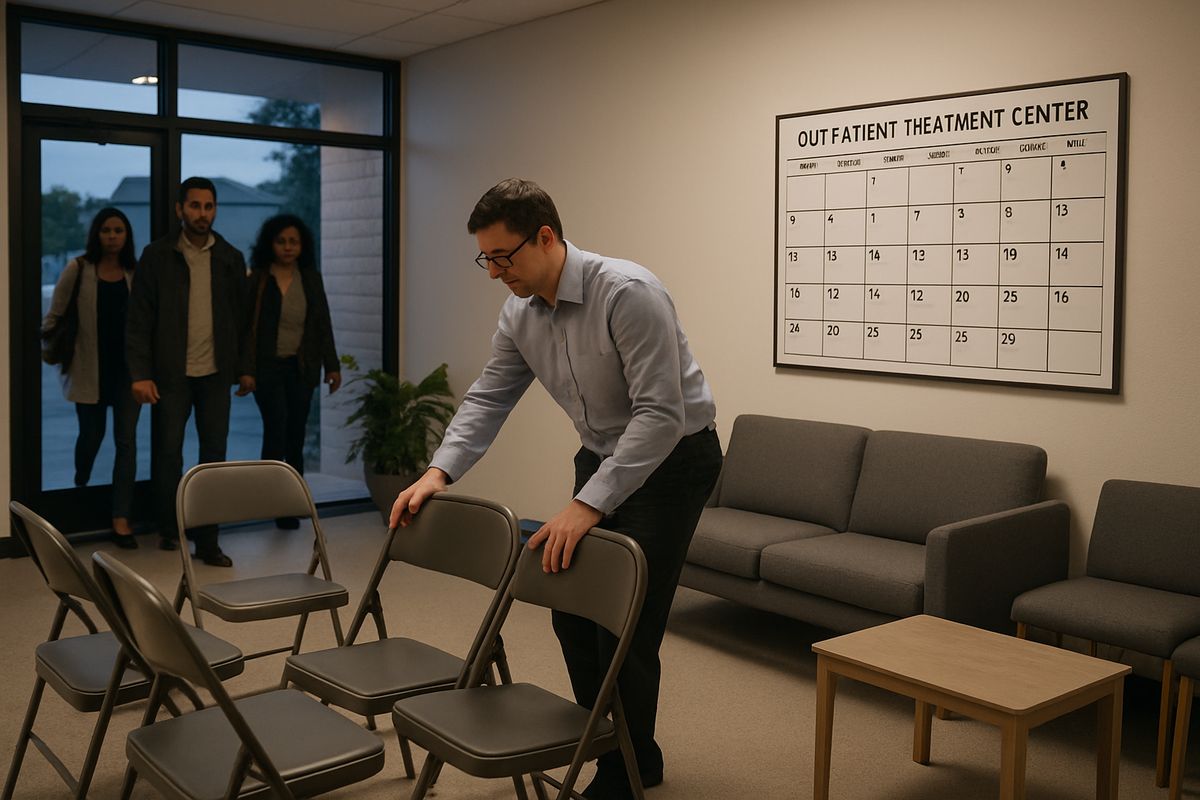
In many intensive outpatient programs, sessions are held 3 to 5 days per week for about 3 hours at a time. Some programs offer morning tracks, others offer evening options, and some have both. That scheduling flexibility is a big reason IOP works for adults trying to keep a job, continue school, or care for children while getting treatment.
Weekly Hours, Program Length, and Session Format
A common schedule falls somewhere between 9 and 15 hours of treatment each week. Program length often ranges from several weeks to a few months, depending on clinical needs, progress, relapse risk, and insurance authorization. Some people move through IOP relatively quickly. Others need more time, and that is not a sign of failure. It usually means the program is responding to what is actually happening.
Sessions are often built around a mix of group therapy, individual counseling, skill-building classes, progress check-ins, and recovery planning. Some programs include psychiatric appointments or medication management as well. According to the National Institute on Drug Abuse, remaining in treatment for an adequate period improves outcomes, which is why consistency matters more than racing through the program (NIDA treatment principles).
A Sample Week in an IOP
A realistic week might include three evening group sessions focused on relapse prevention, coping strategies, and peer discussion. One of those days may also include a brief individual session or treatment review with your counselor. Another day might involve family education, a psychiatric follow-up, or a recovery planning workshop.
Outside of scheduled sessions, you may be asked to attend community support meetings, practice skills between sessions, complete recovery assignments, or track triggers and cravings. That sounds like a lot at first, but the structure is the point. Recovery tends to work better when it becomes part of your routine instead of something you only think about once a week.
Who Is a Good Fit for an Intensive Outpatient Program
IOP is often a good fit for people who need more support than standard outpatient therapy can provide, but do not need 24/7 supervision. It works best when the level of care matches both the severity of the addiction and the realities of your life outside treatment.
The right fit depends on several factors: withdrawal risk, physical health, mental health, relapse history, motivation, and the stability of your home environment. That is why a real clinical assessment matters so much. Choosing the wrong level of care can slow recovery instead of helping it.
When IOP May Be the Right Choice
IOP may make sense if you have stable housing, can participate consistently, and have a reasonably safe environment to return to each day. It is often a strong option for people who want comprehensive care without stepping away from work or family responsibilities entirely.
This level of care can serve different roles. For some, it is the starting point. For others, it is a step-down after inpatient rehab or detox. It can also be a step-up from basic outpatient care when weekly therapy is not enough. If flexibility is one of your biggest concerns, it is worth looking at how outpatient treatment can support recovery without removing daily autonomy.
When a Higher Level of Care May Be Safer
Sometimes IOP is not enough, and saying that clearly builds trust. If you are at risk for severe withdrawal, need medical detox, have unstable psychiatric symptoms, or live in a high-risk environment where substance use is constant, a higher level of care may be safer.
Inpatient rehab or partial hospitalization may also be more appropriate if you have repeated relapses, strong cravings that feel unmanageable, or major difficulty staying abstinent outside a controlled setting. The goal is not to choose the least disruptive option. The goal is to choose the level of support that gives you the best chance at lasting recovery.
Intensive Outpatient Program vs Inpatient and Other Outpatient Options
A lot of families compare IOP with inpatient rehab, PHP, and standard outpatient counseling because the names can blur together fast. The differences are actually pretty straightforward once you strip away the jargon.
IOP vs Inpatient Rehab
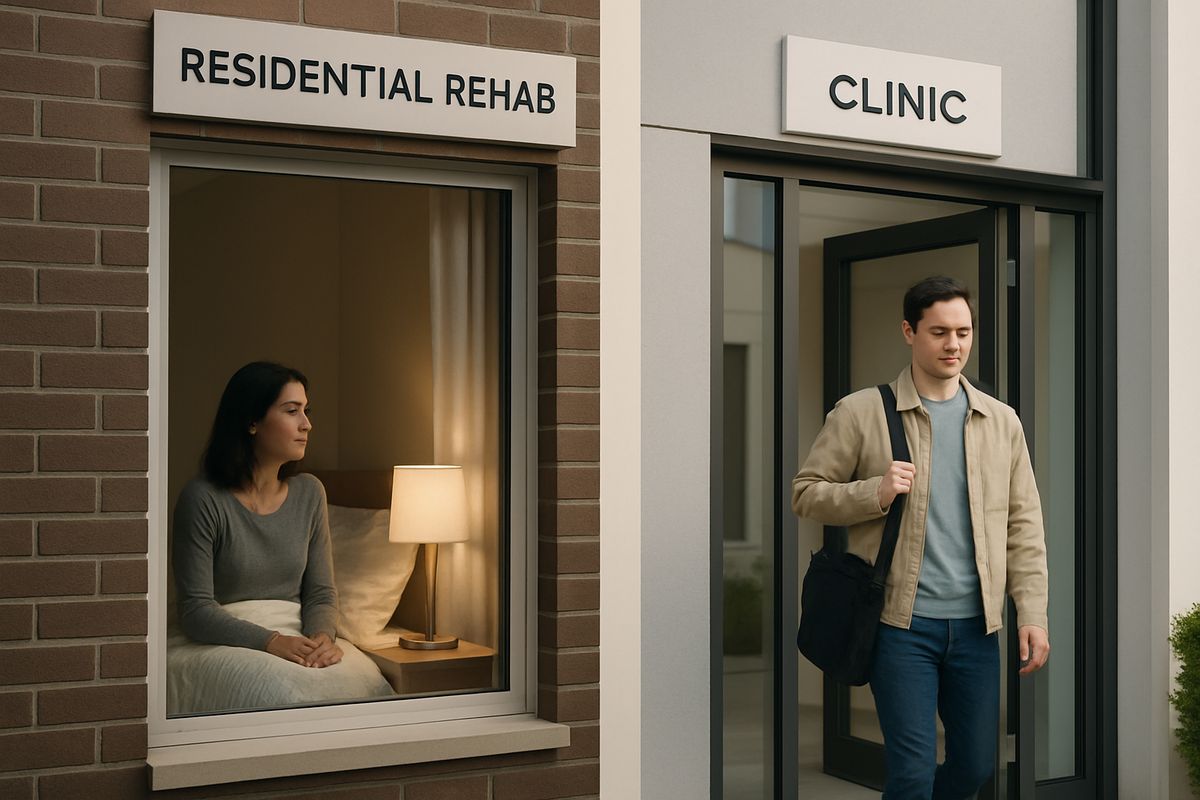
The biggest difference is where you live. In inpatient rehab, you stay onsite and receive round-the-clock support in a structured setting. In IOP, you live at home and attend treatment on a fixed schedule.
That makes IOP more flexible, but also less protective. If your home life is stable and you can manage time outside sessions safely, that flexibility can be a major benefit. If you need constant supervision, separation from triggers, or medical monitoring, inpatient care is usually the better fit. For a deeper comparison, see how outpatient and residential treatment differ in practice.
IOP vs PHP and Standard Outpatient Care
Partial hospitalization programs, or PHPs, are generally more intensive than IOP. They usually involve more treatment hours per week and a higher degree of clinical supervision, often serving people with more acute needs who still do not require overnight care.
Standard outpatient care sits on the other side of IOP. It is less structured and often involves one or two sessions per week. That can be enough for some people, especially later in recovery, but it may not provide enough support early on. IOP tends to work as the middle ground: meaningful structure, real clinical care, and enough flexibility to stay connected to daily life.
Does IOP Treat Co-Occurring Mental Health Conditions?
Yes, many programs do, and this matters more than people often realize. Substance use and mental health conditions frequently overlap. Anxiety, depression, trauma-related symptoms, and bipolar disorder can all affect recovery, and untreated mental health symptoms often increase relapse risk.
The strongest programs address both at the same time through integrated care. That may include therapy focused on both addiction and mental health, psychiatric evaluation, medication management, and coordinated treatment planning. The Department of Veterans Affairs notes that integrated treatment tends to improve outcomes for people dealing with both substance use and mental health concerns (VA overview of co-occurring conditions).
Services vary by provider, though. Some programs say they treat dual diagnosis but really only offer limited support. That is why it helps to ask specifically whether clinicians are trained to treat co-occurring disorders and how psychiatric care is handled. If this is a major concern, review what to expect from programs designed to address addiction and mental health together.
Cost, Insurance Coverage, and Financial Questions
Cost matters, and most people are trying to understand it while already under stress. The price of IOP can vary based on location, number of weekly hours, length of stay, staffing, and whether services like psychiatric care, assessments, or drug testing are billed separately.
The good news is that many insurance plans may cover part or all of treatment when it is medically necessary. Federal parity protections require many health plans to provide mental health and substance use benefits comparable to medical benefits, although coverage details still vary widely (CMS overview of parity protections).
What Insurance May Cover
Insurance coverage often depends on your plan benefits, in-network status, deductible, copays, prior authorization rules, and the provider’s documentation of medical necessity. One plan may cover most of the program after deductible. Another may require significant out-of-pocket costs.
That is why benefit verification matters before enrollment, not after. It helps to understand what insurance approval for outpatient addiction treatment often involves.
Questions to Ask About Out-of-Pocket Costs
Ask direct questions and get the answers in writing when possible. Find out whether the assessment is billed separately, whether drug testing carries extra fees, whether medication management is included, and what happens if insurance authorizes fewer weeks than initially expected.
Also ask about copays, deductibles, missed session policies, and step-down recommendations after IOP ends. Transparent programs should be able to explain the financial side clearly. If they cannot, that is useful information too.
How to Choose the Right Intensive Outpatient Program for Addiction
Not every IOP offers the same depth of care. Some provide tailored treatment programs with strong clinical oversight. Others are little more than a fixed group schedule. The difference matters.
A good program should have licensed clinicians, evidence-based therapies, individualized plans, support for co-occurring disorders, scheduling that fits real life, and a clear path for what happens after discharge. You are not just choosing a calendar. You are choosing the quality of the treatment itself.
Signs of a Quality Program
Look for measurable treatment goals, regular progress reviews, trauma-informed care, relapse prevention built into the program, family involvement when appropriate, and continuity of care after completion. Accreditation and licensure matter because they show the program meets recognized standards.
Outcome tracking is another strong sign. Programs that pay attention to retention, engagement, and discharge planning tend to take recovery seriously. So does a supportive environment where accountability and compassion exist together.
Questions to Ask Before Enrolling
Ask what therapies are used and how often you will meet. Ask how many hours per week are required, whether evening sessions are available, and whether the program can treat co-occurring mental health conditions.
Ask who creates the treatment plan, how progress is reviewed, whether they accept your insurance, and what support looks like after IOP ends. Those questions cut through marketing fast.
Common Questions About Intensive Outpatient Programs
One of the biggest concerns is whether treatment will disrupt the rest of your life. Many people can continue working or attending school during IOP, especially if the program offers evening or flexible scheduling. Still, success depends on practical factors like transportation, childcare, symptom severity, and your energy level in early recovery.
Another common question is detox. IOP is not a substitute for medical detox when withdrawal could be dangerous. Alcohol, benzodiazepines, and some opioid withdrawal situations may require medical supervision first. A professional assessment determines that, and reputable providers will be clear about it.
People also want to know if IOP actually works. The short answer is yes, for many individuals it can be highly effective. Research from government and academic sources has found that intensive outpatient treatment can produce strong outcomes when it is evidence-based, matched to the person’s needs, and supported by continued engagement in recovery (review of evidence from the National Library of Medicine).
Taking the Next Step Toward Treatment
If you are considering an intensive outpatient program for addiction, the most useful next step is a professional assessment. That gives you a clear picture of the right level of care, what treatment should include, and how to verify insurance before you commit.
The right program should offer more than a schedule. It should provide individualized plans, evidence-based therapy, accountability, and the support necessary for lasting recovery while you continue living your life. When treatment fits both your clinical needs and your daily responsibilities, getting help becomes much more possible.