A Complete Guide to Outpatient Addiction Treatment, IOP Programs, Mental Health Services, and Insurance Coverage in Seattle, Washington
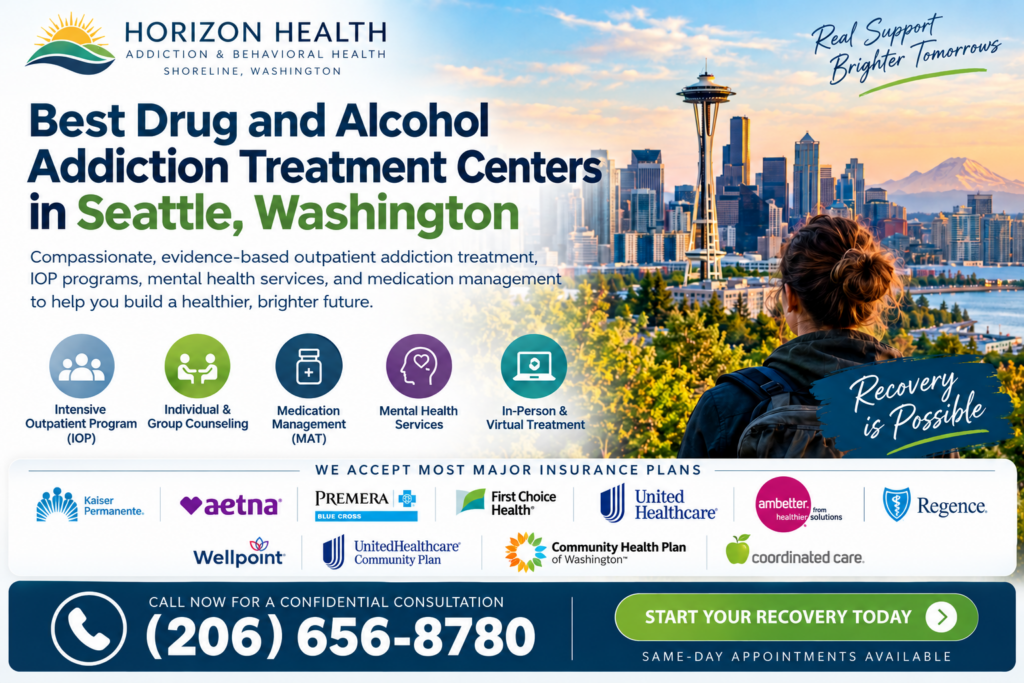
Finding the right addiction treatment centers Seattle residents can access is an important first step toward recovery from drug or alcohol addiction. Whether someone is struggling with opioids, fentanyl, alcohol, prescription medications, cocaine, or other substances, professional treatment can provide structure, clinical guidance, and practical tools for making lasting changes.
However, not every addiction treatment center offers the same services. Some facilities specialize in medical detoxification or residential rehabilitation, while others provide outpatient counseling, intensive outpatient programs (IOP), psychiatric care, and medication-assisted treatment.
For individuals searching for drug rehabs Seattle, alcohol rehabs Seattle, or flexible addiction treatment that accommodates work and family responsibilities, understanding these differences is essential.
Horizon Health drug rehabs Seattle provides outpatient addiction and behavioral health services from Shoreline, Washington, serving the greater Seattle community. Its services include virtual intensive outpatient treatment, individual and group counseling, psychiatric evaluations, medication management, and support for co-occurring mental health conditions.
This guide explains how addiction treatment works, what services to consider, and how to evaluate treatment options.
What Are Addiction Treatment Centers in Seattle?
Addiction treatment centers provide professional services for people experiencing substance use disorders.
A substance use disorder is a treatable medical condition involving difficulty controlling substance use despite harmful consequences.
Symptoms may include cravings, increased tolerance, withdrawal, repeated unsuccessful attempts to stop using, and continued substance use despite problems involving health, employment, or relationships.
Effective addiction treatment begins with a clinical assessment that considers:
- The substances being used.
- Frequency and duration of substance use.
- Withdrawal and overdose risks.
- Physical and mental health conditions.
- Previous treatment experiences.
- Family and social support.
- Employment and housing circumstances.
- Individual recovery goals.
Treatment recommendations should be based on clinical needs rather than a predetermined program length or level of care.
Horizon Health provides treatment for several substance use disorders. Learn more about the specific conditions addressed on its Drug and Alcohol Addiction treatment centers Seattle Treated page.
Types of Drug and Alcohol Addiction Treatment Centers Seattle Offers
Seattle-area treatment providers offer several levels of addiction care.
Medical Detoxification
Medical detox focuses on safely managing withdrawal symptoms and related complications.
Individuals dependent on alcohol or benzodiazepines may face potentially life-threatening withdrawal symptoms, including seizures. Medically supervised withdrawal management may be necessary.
People experiencing opioid withdrawal may also benefit from medical treatment and appropriate medications.
Detoxification alone does not address all the behavioral and psychological aspects of addiction. Continuing treatment is often recommended.
Residential and Inpatient Drug Rehab
Residential addiction treatment involves living at a treatment facility while receiving structured services.
This level of care may be appropriate for individuals who need a highly supervised environment, have unstable living conditions, or require intensive support.
Partial Hospitalization Programs
Partial Hospitalization Programs, commonly called PHP, provide intensive daytime treatment without necessarily requiring overnight residence.
PHP may be recommended when someone needs more clinical structure than an intensive outpatient program.
Intensive Outpatient Programs
An Intensive Outpatient Program (IOP) provides structured addiction treatment while allowing appropriate patients to continue living at home.
IOP commonly combines group therapy, individual counseling, recovery education, and relapse prevention.
Traditional Outpatient Drug Treatment
Traditional outpatient treatment generally involves fewer scheduled treatment hours than IOP.
It may be suitable for individuals with stable symptoms, those stepping down from more intensive treatment, or people who need continuing addiction counseling.
Why Outpatient Addiction Treatment Centers Seattle Are Important
Many individuals need professional addiction treatment but cannot leave employment, school, or family responsibilities for an extended residential stay.
Outpatient treatment offers an alternative when clinically appropriate.
Patients can attend counseling or structured programming while continuing to participate in everyday life.
Benefits may include:
- Maintaining employment when appropriate.
- Remaining connected to supportive family members.
- Practicing recovery skills in real-world situations.
- Attending individual and group therapy.
- Developing relapse prevention strategies.
- Receiving behavioral health support.
- Continuing treatment after detox or residential rehabilitation.
Outpatient treatment is not appropriate for everyone. Individuals with serious withdrawal risks, acute psychiatric instability, or other medical complications may need more intensive care.
For information about available counseling, medication-assisted treatment, and virtual intensive outpatient care, explore Horizon Health’s IOP and Outpatient Addiction Treatment Centers eattle Services.
IOP Drug Rehabs Seattle: Structured Addiction Treatment From Home
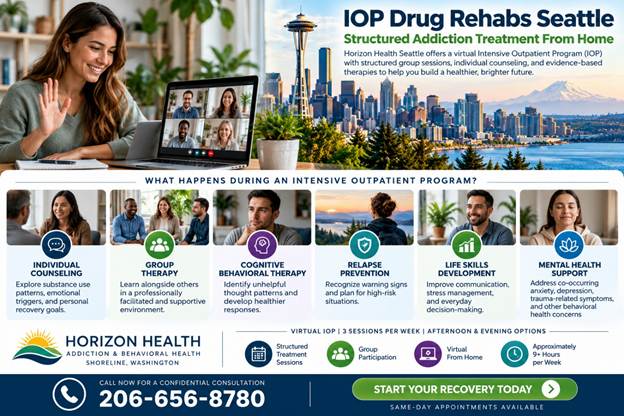
Horizon Health Seattle offers a virtual substance use disorder Intensive Outpatient Program designed for individuals who need more support than standard outpatient counseling.
Its published program information describes structured treatment sessions, group participation, and afternoon or evening options.
A typical adult substance use IOP involves approximately nine or more hours of treatment weekly, although schedules vary by provider.
Horizon Health’s published IOP model includes three weekly sessions, with a focus on structured group treatment and recovery skills.
What Happens During an Intensive Outpatient Program?
Treatment may include:
Individual counseling: Exploring substance use patterns, emotional triggers, relationships, and personal recovery goals.
Group therapy: Learning alongside others in a professionally facilitated environment.
Cognitive behavioral therapy: Identifying unhelpful thought patterns and developing healthier responses.
Relapse prevention: Recognizing warning signs and planning for high-risk situations.
Life skills development: Improving communication, stress management, and everyday decision-making.
Mental health support: Addressing co-occurring anxiety, depression, trauma-related symptoms, and other behavioral health concerns.
Virtual IOP can reduce transportation barriers for eligible patients, but it still requires a private environment, consistent attendance, and active participation.
Alcohol Rehabs Seattle: Understanding Alcohol Addiction Treatment
Alcohol use disorder can affect physical health, relationships, employment, sleep, and emotional well-being.
Some individuals experience cravings, increasing tolerance, difficulty controlling drinking, or withdrawal symptoms when alcohol use decreases.
Treatment may involve:
- Alcohol use disorder assessment.
- Individual counseling.
- Group therapy.
- Behavioral interventions.
- Relapse prevention planning.
- Medication treatment when clinically appropriate.
- Mental health services.
- Continuing recovery support.
Medications such as naltrexone or acamprosate may be appropriate for certain patients with alcohol use disorder.
Individuals at risk of severe alcohol withdrawal should receive medical evaluation before abruptly stopping alcohol use.
Horizon Health’s outpatient services may be appropriate after withdrawal stabilization or for individuals who do not require medically supervised detoxification.
Opioid and Fentanyl Addiction Treatment in Seattle
Opioid use disorder may involve fentanyl, heroin, oxycodone, hydrocodone, or other opioids.
Fentanyl presents a particularly serious overdose risk because of its potency and unpredictable presence in the illicit drug supply.
Evidence-based opioid addiction treatment often includes medications such as buprenorphine or methadone.
Medication treatment can reduce opioid cravings and withdrawal symptoms and is associated with a lower risk of overdose death.
Horizon Health lists medication-assisted treatment among its available services, alongside counseling and behavioral health support.
Patients should ask which medications are available, whether a qualified prescriber is accepting patients, and how medication management is coordinated with counseling.
Medication treatment should be individualized and should not be withheld solely because someone cannot participate in counseling.
Dual Diagnosis Treatment: Addiction and Mental Health Care Together
Substance use disorders frequently occur alongside mental health conditions.
Common co-occurring concerns include:
- Depression.
- Anxiety disorders.
- Post-traumatic stress disorder.
- Bipolar disorder.
- Mood disorders.
- Sleep disturbances.
- Trauma-related symptoms.
For some individuals, substance use becomes a way of coping with emotional distress. For others, drug or alcohol use worsens existing mental health symptoms.
Effective treatment considers both concerns.
Horizon Health provides behavioral health services, including psychiatric evaluations, medication management, and counseling for individuals experiencing substance use and mental health challenges.
A coordinated approach can help patients understand how emotional health, substance use, relationships, and daily stressors interact.
Evidence-Based Therapies Used in Addiction Treatment
When comparing addiction treatment centers Seattle, look for programs that use established clinical approaches.
Cognitive Behavioral Therapy
CBT helps individuals recognize thoughts and behaviors associated with substance use and develop healthier coping strategies.
Motivational Interviewing
Motivational interviewing helps people explore their reasons for change and strengthen motivation for recovery.
Group Counseling
Professionally facilitated group counseling provides recovery education, interpersonal skills, and structured peer support.
Relapse Prevention Therapy
Relapse prevention helps individuals recognize cravings, triggers, emotional warning signs, and situations that may increase the risk of returning to substance use.
Medication-Assisted Treatment
Medications may be an important part of treatment for opioid or alcohol use disorders when clinically indicated.
Psychiatric Care
Psychiatric evaluations and medication management may help address co-occurring mental health symptoms that affect recovery.
Treatment works best when services are matched to each person’s clinical needs.
Addiction Treatment Centers Seattle Accepting Insurance
Cost is one of the most common concerns among individuals researching addiction treatment centers Seattle, Washington.
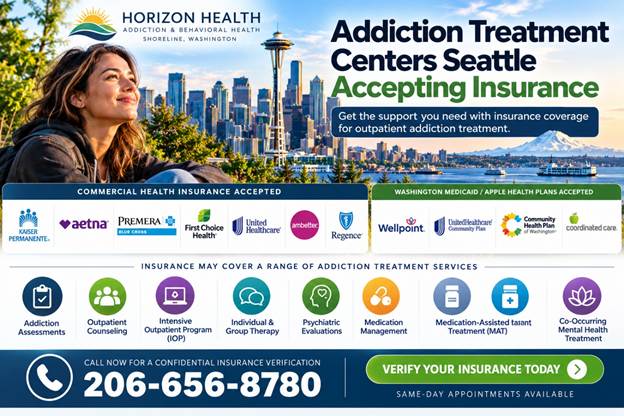
Horizon Health Seattle lists several commercial insurance plans and Washington Medicaid managed-care plans on its website.
Commercial Health Insurance Accepted by Horizon Health
- Kaiser Permanente
- Aetna
- Premera Blue Cross
- First Choice Health
- UnitedHealthcare
- Ambetter
- Regence
Washington Medicaid / Apple Health Plans Accepted
- Wellpoint
- UnitedHealthcare Community Plan
- Community Health Plan of Washington
- Coordinated Care
These are the insurance organizations currently displayed on Horizon Health’s website.
Insurance participation can differ by individual product, employer plan, managed-care network, and treatment service.
Does Insurance Cover Outpatient Addiction Treatment?
Many health insurance plans provide benefits for medically necessary substance use disorder treatment.
Depending on the policy, coverage may include:
- Addiction assessments.
- Outpatient drug and alcohol counseling.
- Intensive outpatient treatment.
- Individual and group therapy.
- Psychiatric evaluations.
- Medication management.
- Certain medications for substance use disorders.
- Co-occurring mental health treatment.
Deductibles, copayments, coinsurance, prior authorization, and network restrictions may apply.
Horizon Health provides confidential insurance verification to help prospective patients understand their benefits before treatment.
For a complete overview of participating insurance companies, Washington Medicaid options, and coverage verification, visit Horizon Health’s Drug rehabs in Seattle accepting insurance nsurance and Payment Options page.
Call 206-656-8780 to ask about insurance coverage and available appointments.
Why Consider Horizon Health Among Addiction Treatment Centers Seattle?
Choosing an addiction treatment provider involves more than comparing advertisements or searching for the nearest location.
Patients should consider whether the center offers appropriate clinical services, qualified professionals, convenient scheduling, and ongoing recovery support.
Horizon Health Seattle emphasizes:
- Outpatient addiction and behavioral health services.
- Virtual intensive outpatient programming.
- Individual and group counseling.
- Psychiatric evaluations.
- Medication management.
- Medication-assisted treatment when appropriate.
- Support for co-occurring mental health conditions.
- Afternoon and evening IOP options.
- Commercial insurance and Medicaid participation.
- Individualized treatment planning.
Its Shoreline location serves individuals seeking addiction treatment throughout the greater Seattle area.
Horizon Health may be particularly suitable for patients who need structured outpatient support without residential admission.
How to Begin Addiction Treatment in Seattle
Starting treatment does not require knowing exactly which program you need.
A professional assessment can help determine the appropriate next step.
Step 1: Contact the Treatment Center
Call Horizon Health at 206-656-8780 to discuss substance use concerns, treatment options, and appointment availability.
Step 2: Verify Insurance Benefits
Provide insurance information through the practice’s approved verification process.
Step 3: Complete an Assessment
A qualified professional reviews substance use history, mental health symptoms, withdrawal risks, and treatment goals.
Step 4: Develop a Personalized Treatment Plan
The clinical team determines whether outpatient counseling, IOP, medication treatment, or referral to a higher level of care is appropriate.
Step 5: Begin Recovery Support
Participate in recommended services and develop strategies for maintaining progress beyond the initial treatment period.
To learn more about the intake process, required documentation, scheduling, and insurance verification, visit Admissions and Starting Treatment.
Five Frequently Asked Questions About Addiction Treatment Centers Seattle
1. How do I find the best drug and alcohol addiction treatment center in Seattle?
Look for a licensed provider offering appropriate clinical assessments, qualified professionals, evidence-based treatment, and a level of care that matches your needs.
Ask whether the center provides individual counseling, group therapy, medication treatment when indicated, dual diagnosis support, and continuing care planning.
The best treatment option is the one that can safely address your specific medical, behavioral health, and recovery needs.
2. How much does drug and alcohol rehab cost in Seattle?
The cost of addiction treatment varies according to the level of care, treatment duration, clinical services, and insurance coverage.
Residential rehabilitation generally involves different costs from outpatient counseling or IOP.
Insurance may reduce expenses for medically necessary treatment, but patients should verify network participation, deductibles, copayments, and authorization requirements.
3. Does Washington Medicaid or Kaiser Permanente cover addiction treatment in Seattle?
Washington Medicaid, also called Apple Health, and many Kaiser Permanente plans provide benefits for qualifying substance use disorder treatment.
Coverage depends on the specific plan, provider network, medical necessity, and treatment service.
Horizon Health lists Kaiser Permanente and several Washington Medicaid managed-care plans among its accepted insurance options.
Contact the admissions team to verify individual coverage.
4. What is the difference between inpatient drug rehab and outpatient addiction treatment?
Inpatient or residential rehabilitation requires patients to stay at a treatment facility and generally provides more intensive supervision.
Outpatient treatment allows clinically appropriate individuals to live at home while attending scheduled counseling or treatment sessions.
Intensive outpatient programs provide more structure than traditional outpatient counseling without requiring overnight residence.
The appropriate level of care depends on withdrawal risk, substance use severity, mental health symptoms, and living circumstances.
5. How long does addiction treatment last, and is IOP effective?
Treatment duration varies according to the individual’s clinical needs and progress.
Some residential programs last approximately 30 days, while intensive outpatient treatment may continue for several weeks or months.
Research supports IOP as an effective treatment option for many individuals with substance use disorders who do not require 24-hour supervision.
Ongoing counseling, medication treatment when appropriate, and relapse prevention planning may support long-term recovery.
Contact Horizon Health Drug Rehabs Seattle – Addiction Treatment Centers Seattle
If you are comparing addiction treatment centers Seattle, Horizon Health offers outpatient substance use disorder treatment and behavioral health services designed to help eligible patients access professional care while managing daily responsibilities.
Whether you are seeking drug rehabs Seattle, alcohol rehabs Seattle, IOP drug rehabs Seattle, or treatment for co-occurring mental health conditions, the team can help you explore available options.
Horizon Health Seattle
Address: 17544 Midvale Ave N, Suite 307, Shoreline, WA 98133
Insurance: Kaiser Permanente, Aetna, Premera, First Choice Health, UnitedHealthcare, Ambetter, Regence, Wellpoint, Community Health Plan of Washington, and Coordinated Care, subject to plan verification.
Contact Horizon Health drug rehabs Seattle to request an assessment, ask about IOP scheduling, or discuss your addiction treatment needs.
Recovery begins with understanding your options. Contact Horizon Health to discuss an assessment and find out whether outpatient addiction treatment or virtual IOP may be appropriate for you.